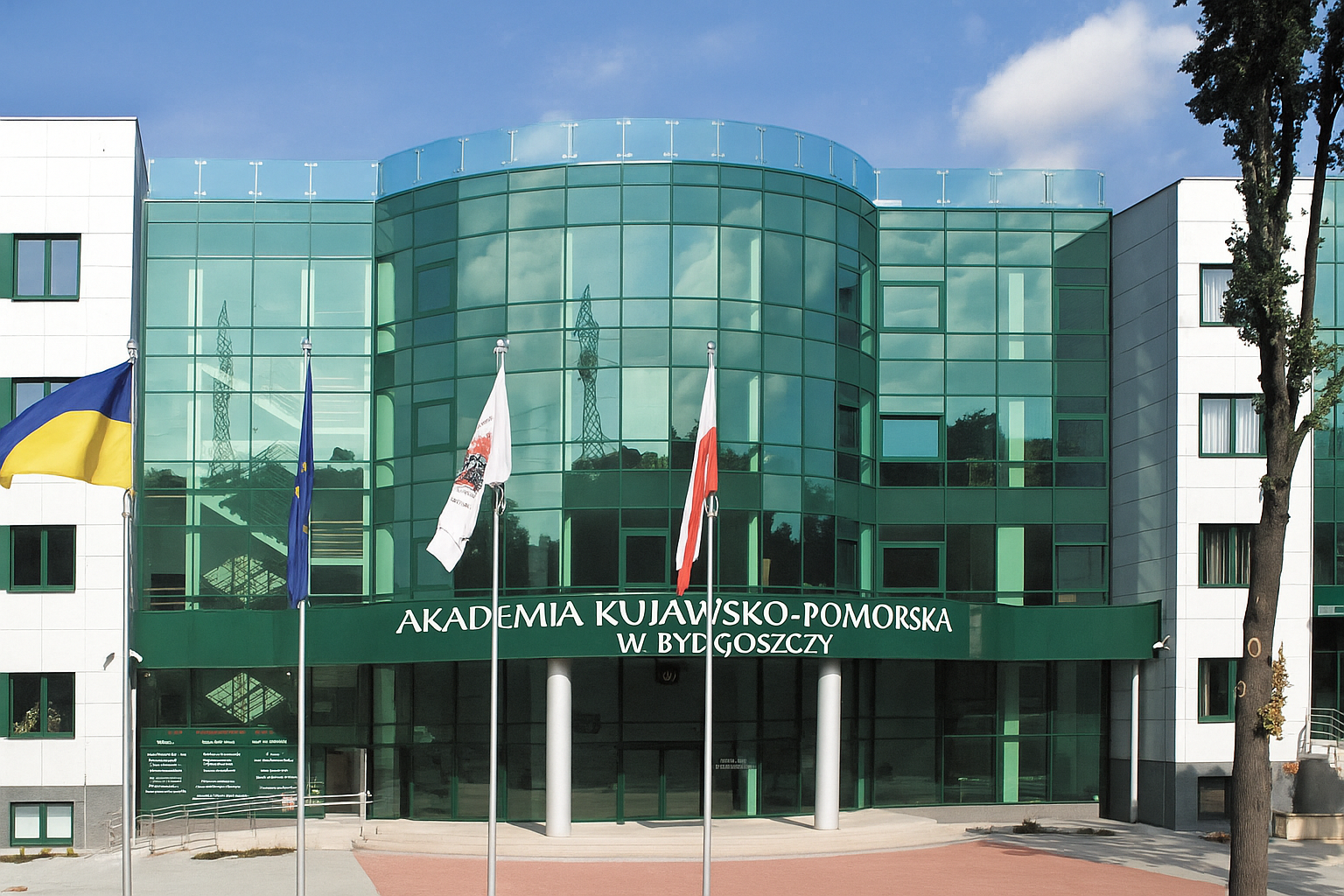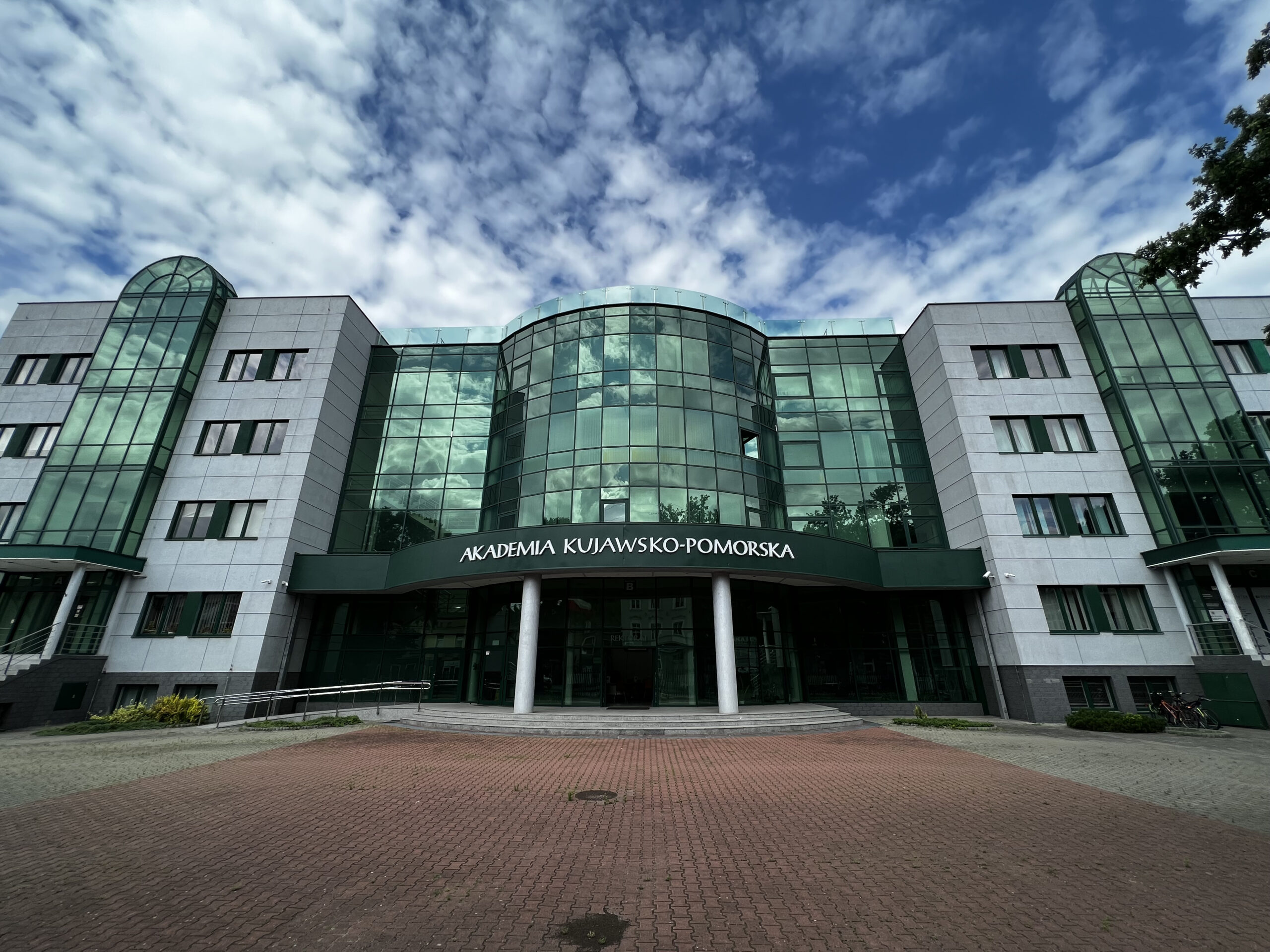

Kujawy and Pomorze University in Bydgoszcz hosted the International Interdisciplinary Conference “Europe Today and Tomorrow: Economy, Society and Environment” on 21 March 2025.
The conference took place at the University’s headquarters at ul. Toruńska 55-57, 85-023 Bydgoszcz, as part of the International Open Science Days, an academic initiative organised at KPU since 2012.
The event gathered representatives of the academic community, students and people interested in contemporary European issues. The conference created space for interdisciplinary discussion on the current condition of Europe and its future development in three key dimensions: economy, society and environment.
Researchers and participants representing domestic and international academic centres took part in the event. A strong student presence was also an important part of the conference, supporting academic exchange and open discussion between different groups of participants.
Main information
| Information | Details |
|---|---|
| Event name | International Interdisciplinary Conference “Europe Today and Tomorrow: Economy, Society and Environment” |
| Short name | ETAT Conference 2025 |
| Date | 21 March 2025 |
| Host institution | Kujawy and Pomorze University in Bydgoszcz |
| Location | ul. Toruńska 55-57, 85-023 Bydgoszcz, Poland |
| Event format | Academic and interdisciplinary conference |
| Event context | International Open Science Days |
| Registration deadline | 12 March 2025 |
| Main thematic areas | Economy, society and environment |
Conference purpose
Europe is facing a period of major economic, social and environmental transformation. These changes require careful academic reflection, both within individual disciplines and through interdisciplinary cooperation.
The main purpose of the ETAT Conference was to assess the current situation in Europe and discuss possible future developments. The conference focused on the relationship between what Europe is experiencing today and what may shape its future in the coming years.
The programme encouraged participants to analyse European challenges from several perspectives, including economic development, social change, environmental responsibility, technological transformation, migration, demographic processes, public policy and sustainable development.
The conference was structured around three broad thematic areas:
- today’s landscape and tomorrow’s economic prospects,
- the current situation and the future of European society,
- innovations and challenges in achieving sustainable development goals.
Conference schedule
| Time | Programme point |
|---|---|
| 10:00 – 10:30 | Registration of participants |
| 10:30 – 12:20 | Opening and First Session |
| 12:20 – 13:00 | Break / Snack lunch |
| 13:00 – 14:30 | Second Session |
| 14:30 | End of the conference |
Participants interested in taking part in the conference were asked to complete the registration form by 12 March 2025.
Opening and First Session
The opening session introduced the main topic of the conference and brought together speakers from Poland, Ukraine, Lithuania, Albania and other academic environments.
| Time | Speaker | Institution / Country | Presentation |
|---|---|---|---|
| 10:30 – 10:35 | Dariusz Czakowski, PhD, Assoc. Prof. | Kujawy and Pomorze University in Bydgoszcz, Poland | Conference opening |
| 10:35 – 10:50 | Professor Viktor Greshta | National University Zaporizhzhia Polytechnic, Ukraine | Innovative regional polytechnic universities in the European Ukraine of the future |
| 10:50 – 11:05 | Mariia Pavlenko | National University Zaporizhzhia Polytechnic, Ukraine | Navigating Today’s Challenges, Securing Tomorrow’s Opportunities with the help of Youth |
| 11:05 – 11:20 | Diana Micevičienė, PhD, Assoc. Prof. | Panevėžys University of Applied Sciences, Lithuania | Brand Image Development: Case of a Small Parcel Delivery Company |
| 11:20 – 11:35 | Olena Tokarenko, PhD, Assoc. Prof. | Berdyansk State Pedagogical University, Ukraine | Experience of the countries of Central and Eastern Europe on the way to EU membership: main lessons for Ukraine |
| 11:35 – 11:50 | Kristina Karosevičienė, Daiva Šileikienė, PhD | Kolping Higher Education Institution, Lithuania | Hydrogen Technology Applications in the Transport Sector |
| 11:50 – 12:05 | Petrit Dollani, PhD | University of Tirana, Albania and Warsaw School of Economics, Poland | The Challenges of Service Sector in the Western Balkan Countries Toward Their Integration |
| 12:05 – 12:20 | Dariusz Czakowski, PhD, Assoc. Prof. | Kujawy and Pomorze University in Bydgoszcz, Poland | Comparison of production factor efficiency in the European Union member states |
Moderator: Sylwia Czakowska, PhD
The first session focused on economic transformation, regional development, European integration, innovation, technology and challenges experienced by different countries and regions in Europe.
Second Session
The second session continued the interdisciplinary discussion and included presentations on innovation ecosystems, environmental protection, green skills, social inequalities, international economic relations, the labour market and sustainability reporting.
| Time | Speaker | Institution / Country | Presentation |
|---|---|---|---|
| 13:00 – 13:10 | Petro Gudz, prof. AKP, dr hab.; Prof. dr hab. Maryna Gudz | Kujawy and Pomorze University in Bydgoszcz, Poland; National University Zaporizhzhia Polytechnic, Ukraine | Methodology of scientific knowledge of business and innovation regional ecosystems |
| 13:10 – 13:20 | Anastasiia Bezkhlibna, PhD, Assoc. Prof. | National University Zaporizhzhia Polytechnic, Ukraine | Innovative ecosystems in social and economic relations |
| 13:20 – 13:30 | Tomasz Kalaga, PhD | Kujawy and Pomorze University in Bydgoszcz, Poland | Dwelling in dealing: some hermeneutic dilemmas in calculative culture |
| 13:30 – 13:40 | Kamil Margielewicz | University of Silesia in Katowice, Katowice Business University, Poland | Environmental protection in the European Union. The context of protecting large forest areas and storing radioactive waste |
| 13:40 – 13:50 | Adam Gajek | Poland | The Role of the European Union in Advancing Green Skills Development in Poland |
| 13:50 – 14:00 | Katarzyna Szczypczyk | Warsaw School of Economics, Poland | Strong dependence on economic growth as a source of deepening social inequalities in the European Union |
| 14:00 – 14:10 | Ivan Perepelkin | Jagiellonian University, Poland | Economic aspect of Moldova-China relations |
| 14:10 – 14:20 | Yahor Zayats | Pomeranian University in Słupsk, Poland | AI & Automation: Reshaping the IT Job Market |
| 14:20 – 14:30 | Sylwia Czakowska, PhD | Kujawy and Pomorze University in Bydgoszcz, Poland | Corporate Sustainability Reporting in Poland: Challenges and Dilemmas |
Moderator: Dariusz Czakowski, PhD, Assoc. Prof.
Thematic Panel 1: Today’s landscape and tomorrow’s economic prospects
The first thematic panel focused on economic challenges and future development scenarios in Europe. The discussion covered the relationship between economic growth, social stability, labour market transformation and international relations.
Key topics included:
- balancing economic growth with environmental protection,
- economic inequalities and regional disparities within Europe,
- the socioeconomic impact of inflation and the energy crisis on vulnerable groups,
- ageing populations and their impact on healthcare, pensions and labour markets,
- the future of the labour market in Europe, including automation, artificial intelligence and reskilling,
- harmonisation and regulatory changes affecting enterprises,
- Europe’s relations with the United States, China and emerging markets.
This panel highlighted the need to analyse economic development not only through growth indicators, but also through social resilience, demographic change, technological transformation and the long-term competitiveness of European economies.
Thematic Panel 2: Current situation and the future of European society
The second thematic panel addressed social issues that shape European communities today and will influence their development in the future.
Key topics included:
- challenges and perspectives for multiculturalism in Europe,
- socioeconomic impacts of migration and strategies for integration,
- bridging the digital divide and strengthening digital sovereignty,
- lifelong learning and inclusive access to education,
- policies addressing low birth rates and supporting families,
- lessons learned from disruptions caused by the pandemic and geopolitical tensions,
- mental health as a growing concern in post-pandemic Europe,
- contemporary changes in European culture, literature and language.
This part of the conference underlined the importance of social cohesion, education, cultural dialogue and inclusive public policies in responding to the complex challenges faced by European societies.
Thematic Panel 3: Innovations and challenges in achieving sustainable development goals
The third thematic panel focused on environmental transformation, sustainable development and innovation.
Key topics included:
- reducing waste and supporting sustainable production and consumption,
- innovation in recycling and upcycling industries,
- nature-based solutions for urban and rural areas,
- renewable energy infrastructure and storage solutions,
- balancing economic growth with environmental preservation,
- implementation of the European Green Deal.
The panel connected sustainability with public policy, technological development and social responsibility. It also showed that environmental goals require cooperation between academic institutions, public authorities, enterprises and local communities.
Publications
Articles prepared on the basis of conference presentations, after receiving a positive review, may be published in a peer-reviewed scientific monograph by the Publishing House of Kujawy and Pomorze University or in scientific journals included in the list of the Ministry of Education and Science.
More information about the University’s journals can be found on the relevant journal pages:
Wstaw jako lista linków albo przyciski:
Academic importance of the ETAT Conference
The ETAT Conference supported interdisciplinary academic exchange and created an opportunity to discuss Europe’s current condition and future from multiple research perspectives.
The event connected academic reflection with practical issues affecting modern Europe, including economic uncertainty, social transformation, migration, public policy, technological development, sustainability, education and the labour market.
By bringing together representatives of domestic and international research centres, the conference strengthened academic cooperation and contributed to the international dimension of Kujawy and Pomorze University in Bydgoszcz.
Conference contact
For more information about the ETAT Conference, please contact:
Sylwia Czakowska, PhD
Kujawy and Pomorze University in Bydgoszcz
Dariusz Czakowski, PhD, Assoc. Prof.
Kujawy and Pomorze University in Bydgoszcz
Kujawy and Pomorze University in Bydgoszcz
ul. Toruńska 55-57
85-023 Bydgoszcz
Poland
Phone: +48 52 365 84 27
Phone: +48 52 365 84 46
Contact International Office
View Events Calendar